
I Was Told I Don’t Have Enough Bone for Dental Implants. Can I Still Get Them? Ask Secure Dental


Answered by Dr. Dai Lao Rodriguez, Secure Dental on Montrose Ave. in Chicago, Illinois
“Being told that you have bone loss does not automatically mean dental implants are impossible. It means we need to understand how much bone is actually available, where it is located, and what type of replacement tooth we are trying to support.”
This is an important distinction.
Dental implants are placed into the jawbone, so the bone needs to provide enough support for the implant to remain stable during healing and function. But patients have very different amounts of bone, and implant treatment is not planned from a single measurement or a quick look inside the mouth.
At Secure Dental on Montrose Ave., implant treatment is planned using modern digital dentistry, including CBCT imaging and advanced scanning technology. Secure Dental identifies me as an implant and aesthetic dentist with experience integrating the surgical and restorative portions of implant care.
Why Does Bone Matter for a Dental Implant?
A dental implant is surgically placed into the jawbone and acts as an anchor for a crown, bridge, or denture.
The FDA explains that dental implants are placed into the jaw to support artificial teeth and restore chewing function. Overall health, bone anatomy, oral hygiene, smoking, and other factors can all influence implant healing and long-term success.
The implant needs adequate support around it.
That does not necessarily mean you need a huge amount of bone everywhere in your jaw. We are interested in the bone available specifically where an implant may be positioned and whether that bone can support the planned restoration.
Why Does Bone Shrink After a Tooth Is Lost?
Your jawbone responds to function.
Natural tooth roots transfer chewing forces into the surrounding bone. After a tooth is removed, that area no longer receives the same stimulation.
Over time, the ridge that once supported the tooth can change in height, width, and shape.
The FDA identifies jawbone shrinkage as one of the potential consequences of tooth loss and notes that implants may help maintain surrounding bone after placement.
How much bone changes varies considerably from person to person.
That is why someone who lost a tooth ten years ago may still have enough bone for an implant, while another patient may need additional preparation even though the tooth was removed much more recently.
Can I Tell How Much Bone I Have by Looking at My Gums?
No.
The gums can look wide and healthy while the bone underneath is relatively narrow.
The opposite can also happen.
This is where three-dimensional imaging becomes useful.
Secure Dental’s Montrose office specifically highlights CBCT imaging as part of Dr. Rodriguez’s digital implant workflow. CBCT imaging allows the dentist to evaluate the jaw in three dimensions rather than relying only on what can be seen clinically.
Depending on the case, we may evaluate:
- Bone height
- Bone width
- Bone shape
- Nearby tooth roots
- Sinus anatomy
- Important nerves
- Gum health
- The position of the future replacement tooth
Implant treatment should be planned around where the final tooth needs to be, not simply where there happens to be the most bone.
What Is a Dental Bone Graft?
A bone graft is a procedure used to add or rebuild bone in an area where additional support may be helpful.
If an implant is planned but the ridge is too narrow or deficient in a particular area, grafting may sometimes improve the implant site.
A graft may use different types of bone or bone-substitute materials depending on the procedure and patient.
The goal is not to make your entire jaw larger.
It is to create the amount and shape of bone needed for the specific treatment being planned.
Does Everyone Getting an Implant Need a Bone Graft?
No.
Many patients have adequate bone for implant placement without grafting.
Other patients need a relatively small amount of grafting, while some require a more involved procedure.
Whether you need it depends on factors such as:
- How long the tooth has been missing
- The reason the tooth was lost
- Existing gum disease
- Previous infection
- The location of the missing tooth
- Jaw anatomy
- Implant size and position
- The final restoration
A patient who had a tooth removed because of a large infection may have a very different bone condition from someone who lost a healthy tooth in an accident.
There is no responsible way to tell every implant patient, “You will need a graft,” or, “You definitely will not.”
We need to evaluate the actual site.
Can Bone Grafting Be Done When the Tooth Is Removed?
Sometimes.
If a tooth needs to be extracted and an implant is being considered for the future, we may evaluate whether grafting the extraction site is appropriate.
This is sometimes referred to as socket preservation or ridge preservation.
In another situation, an implant may be placed at the same appointment as the extraction.
In other cases, the area may need to heal before grafting or implant placement.
The correct sequence depends on:
- Infection
- Existing bone
- Tooth position
- Gum tissue
- Implant stability
- Overall treatment plan
Same-day treatment can be useful for selected patients, but faster is not automatically better.
Predictability is more important than speed.
How Long Do I Have to Heal After a Bone Graft?
Healing time varies according to the procedure.
Some grafting procedures can be performed at the same time as implant placement.
Others require a period of healing before the implant is placed.
The FDA notes that implant healing itself may require several months or longer.
If grafting is required first, your total treatment timeline may therefore be longer than someone who can receive an implant without additional site development.
During your consultation, we should explain the sequence clearly so you understand:
- What procedure is being recommended
- Why it is necessary
- How long healing may take
- When the implant may be placed
- When the final tooth may be attached
What If I Have Severe Bone Loss?
Severe bone loss does not have one universal solution.
Depending on the situation, possibilities might include:
- More extensive grafting
- A different implant position
- A different number of implants
- An implant-supported bridge
- A removable implant-supported restoration
- A fixed full-arch restoration
- A traditional bridge
- A removable denture
Our earlier Ask Secure Dental article, “I’m Missing Several Teeth. Do I Need an Implant for Every Tooth?”, explains why several missing teeth do not necessarily require the same number of implants.
Secure Dental’s Montrose location currently offers single implants, implant-supported bridges, snap-in implant dentures, and All-On-X full-arch implant treatment.
The fact that one implant approach is not appropriate does not mean there are no tooth-replacement options.
What If My Dentist Previously Told Me I Was Not an Implant Candidate?
It may still be worth having the area evaluated if significant time has passed or you want to understand your current options.
That does not mean the previous dentist was wrong.
Implant candidacy depends on many factors, including:
- Bone anatomy
- Gum health
- Overall health
- Smoking
- Diabetes control
- Medications
- Ability to maintain oral hygiene
- Treatment complexity
- The type of restoration being planned
The FDA specifically advises patients considering implants to discuss their overall health and candidacy with their dental provider because those factors affect healing and long-term outcomes.
Technology and treatment options can also change over time.
The best approach is to evaluate your condition today.
Can Gum Disease Cause Bone Loss Around My Teeth?
Yes.
Periodontal disease can damage the tissues and bone that support natural teeth.
Active gum disease should be addressed before or alongside implant planning.
The FDA identifies untreated periodontal disease and difficulty maintaining oral hygiene among factors associated with implant complications.
Placing an implant into a mouth with uncontrolled disease does not solve the underlying problem.
We need to create an environment where the implant and surrounding tissues have a reasonable chance of remaining healthy.
Does Smoking Affect Dental Implant Treatment?
It can.
Smoking may interfere with healing and is associated with a greater risk of implant complications.
The FDA specifically notes that smoking may delay healing and reduce long-term implant success.
If you smoke, tell your dentist honestly.
The purpose is not judgment. It is risk assessment.
We need accurate information to plan treatment responsibly.
Can Diabetes Prevent Me From Getting Implants?
Having diabetes does not automatically disqualify someone from implant treatment.
How well the condition is controlled matters.
The FDA identifies uncontrolled diabetes as a factor that may increase the risk of implant complications and infection.
Your dentist may want information about your current health, medications, and medical management before proceeding.
Implant dentistry is connected to overall health, which is why your medical history matters even though treatment occurs in your mouth.
Will an Implant Stop Future Bone Loss?
Implants transfer chewing forces into the surrounding jawbone and can help preserve bone in the area.
The FDA lists helping keep the jawbone from shrinking as one potential benefit of implant treatment.
But an implant does not make the surrounding bone immune to disease.
Bone can still be lost around an implant because of infection, poor oral hygiene, smoking, uncontrolled medical conditions, or other complications.
Implants still require:
- Daily cleaning
- Healthy gums
- Professional dental care
- Monitoring
- Attention to grinding and bite forces
Think of an implant as a long-term dental restoration, not a maintenance-free artificial tooth.
What Does an Implant Evaluation at Montrose Look Like?
At Secure Dental on Montrose Ave., implant planning begins with understanding both the surgical site and the tooth or teeth we ultimately want to create.
Your evaluation may include:
- A review of your medical history
- Examination of the gums and remaining teeth
- Evaluation of the missing-tooth area
- Dental imaging
- CBCT imaging when appropriate
- Digital scanning
- Assessment of bone
- Bite evaluation
- Discussion of fixed versus removable options
- Review of treatment stages
My background as both a dentist and dental ceramist is particularly useful here because implant placement and restoration design should work together.
The implant needs to be positioned so the final tooth can look, function, and be cleaned appropriately.
Secure Dental describes my approach as integrating implant surgery, restorative design, ceramics, CBCT imaging, advanced scanning, and digital dentistry throughout treatment planning.
Do Not Rule Yourself Out Before You Have Been Evaluated
If someone has told you that you have bone loss, that is useful information.
It is not necessarily the end of the implant conversation.
You may have enough bone already.
You may need bone grafting.
You may need a different implant design.
Or another form of tooth replacement may ultimately make more sense.
The only responsible way to answer the question is to evaluate your anatomy, health, and goals.
Request an implant evaluation with Dr. Dai Lao Rodriguez at Secure Dental on Montrose Ave., located at 5621 W Montrose Ave., Chicago, Illinois 60634.
Call (773) 427-1000 or visit the Secure Dental Montrose Ave. location page to request an appointment. Secure Dental currently lists Dr. Rodriguez as its Montrose dentist specializing in implant and aesthetic dentistry.
Ask Your Own Question
Have a dental question you would like a Secure Dental doctor to answer?
About Dr. Dai Lao Rodriguez
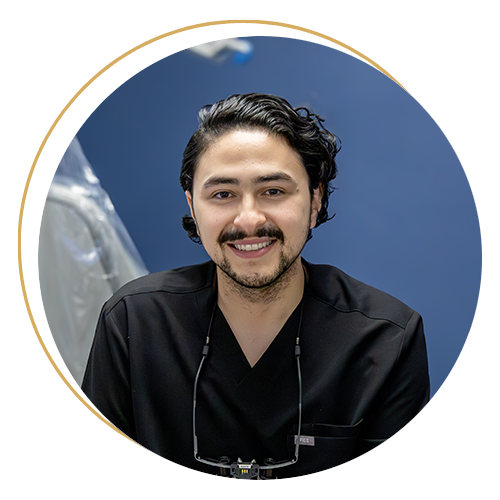
Dr. Dai Lao Rodriguez is an implant and aesthetic dentist at Secure Dental’s Montrose Ave. office in Chicago.
Dr. Rodriguez began his career as a dental technician and ceramist before becoming a dentist and pursuing advanced training in implant procedures and prosthetic rehabilitation. Secure Dental describes his treatment philosophy as integrating surgical expertise with restorative design so implant cases can be planned from placement through the final prosthesis.
His digital workflow incorporates technologies such as CBCT imaging, advanced scanning systems, and 3D printing to improve implant planning and restorative precision.
Request an appointment with Dr. Dai Lao Rodriguez on Montrose Ave.