Why Is One of My Teeth Turning Gray or Dark? Ask Secure Dental


Answered by Dr. Eric Wing, Secure Dental on Foster Ave. in Chicago, Illinois
“When one tooth suddenly looks darker than the teeth around it, I do not want to assume it is just a stain. A single gray, brown, or dark tooth can sometimes tell us that something has changed inside the tooth, especially if that tooth was injured in the past.”
Tooth discoloration has many possible causes.
Some color changes are cosmetic and affect the outside of the tooth. Others begin inside the tooth and may be related to trauma, changes in the pulp, previous dental treatment, decay, or the natural structure of the tooth.
That distinction determines what treatment, if any, is appropriate.
Secure Dental’s Foster Ave. office currently provides general, restorative, cosmetic, emergency, and root canal dentistry, which allows us to evaluate both the health and appearance of a discolored tooth before deciding how to treat it.
Why Would Only One Tooth Become Dark?
When all of the teeth gradually become more yellow with age, the explanation may be relatively straightforward.
One tooth changing color is different.
I start asking questions such as:
- Did you ever hit that tooth?
- Did you fall as a child or teenager?
- Has the tooth had a large filling?
- Has it undergone root canal treatment?
- Does it hurt?
- Is it sensitive to temperature?
- Has the color changed quickly?
- Does the tooth have a crack?
- Is the gum around it swollen?
- Has anyone noticed the tooth getting darker over time?
Even an injury that happened years ago can matter.
You may not remember falling off a bike, getting hit during sports, or biting something unexpectedly hard, but dental trauma can affect the tissues inside a tooth long after the initial event.
Can an Old Injury Make a Tooth Turn Gray?
Yes.
The American Dental Association explains that a tooth may change color following trauma because the tooth reacts to the injury. A tooth can become darker than its neighbors, and a tooth changing from pink toward gray may indicate significant damage to the pulp inside.
Think of the pulp as the living center of the tooth.
It contains nerves, blood vessels, and connective tissue.
When a tooth receives a strong impact, the outer enamel may remain intact while the tissue inside is injured.
Sometimes the pulp recovers.
Sometimes the injury causes internal changes that alter the color of the tooth.
That is why I would not recommend simply whitening a gray tooth before determining why it became gray.
Does a Gray Tooth Mean the Nerve Is Dead?
Not automatically, but it is one possibility.
A darkened tooth after trauma deserves an examination because discoloration can occur when the pulp has been damaged.
The ADA notes that a darkened tooth following trauma may indicate that the pulp has died and that root canal treatment may be necessary in some cases.
However, color alone is not enough to make that diagnosis.
We may need to evaluate:
- Your symptoms
- The history of trauma
- How the tooth responds to sensitivity testing
- Dental X-rays
- The tissues around the root
- Changes compared with previous images
Some discolored teeth remain comfortable.
Others eventually develop pain, swelling, or infection.
The absence of pain does not necessarily tell us whether the pulp is healthy.
What If the Tooth Does Not Hurt at All?
Still have it checked.
One of the biggest misconceptions about dental problems is that serious conditions always hurt.
They do not.
A tooth can undergo changes inside without producing significant discomfort.
If the pulp gradually loses vitality, a patient may have very little sensitivity because the nerve is no longer responding normally.
That is why someone can walk into the office and say:
“It looks darker, but it feels completely fine.”
That is useful information, but it does not eliminate the need for an examination.
Could It Just Be a Stain?
Absolutely.
Not every dark tooth has a damaged nerve.
Teeth can develop discoloration from:
- Coffee
- Tea
- Tobacco
- Red wine
- Pigmented foods
- Plaque or tartar
- Aging
- Certain medications
- Previous dental materials
The ADA explains that tooth color changes may occur because of age, tobacco use, trauma, medication exposure, and other factors.
The pattern gives us clues.
Surface staining commonly affects several teeth.
A single tooth becoming noticeably gray compared with every tooth around it makes me more interested in what may be happening internally.
Can a Cavity Make a Tooth Look Dark?
Yes.
Decay can appear brown or dark, particularly as it becomes larger.
A tooth may also appear darker around an older filling or beneath areas where enamel has weakened.
If decay becomes deep enough to reach the pulp, the tooth may develop additional symptoms such as:
- Cold sensitivity
- Heat sensitivity
- Pain while chewing
- Spontaneous aching
- Swollen gums
- A gum bump
- Drainage
Treatment depends on how far the decay extends.
A smaller cavity may need a filling.
A larger damaged tooth may need a crown.
If the pulp has become irreversibly inflamed or infected, root canal therapy may be appropriate.
Secure Dental’s Foster Ave. office provides both restorative dentistry and root canal therapy when needed.
Can a Tooth Turn Dark After a Root Canal?
A tooth that was already discolored before root canal therapy may remain darker afterward.
The American Association of Endodontists notes that root canal treatment itself does not necessarily make a tooth black. If a tooth was dark before treatment and still does not match the surrounding teeth after treatment, internal bleaching may sometimes be considered.
There are also situations where an older root canal tooth develops color changes over time.
The appropriate cosmetic treatment depends on:
- How dark the tooth is
- Whether the root canal remains healthy
- How much natural tooth remains
- Whether the tooth needs a crown
- Existing fillings or restorations
- The appearance of the surrounding teeth
Cosmetic treatment should come after confirming the tooth itself is healthy.
Will Regular Teeth Whitening Fix One Gray Tooth?
Not necessarily.
This is important because patients sometimes purchase whitening products specifically because one tooth looks darker.
Whitening works best for certain types of discoloration.
The ADA notes that gray-toned teeth may respond less predictably to bleaching than yellow teeth. Whitening also does not change the color of crowns, veneers, or fillings, and discoloration caused by trauma may require a different treatment approach.
If every natural tooth is whitened except the one that concerns you, the contrast could actually become more noticeable.
That is why a cosmetic plan needs to consider the entire smile.
Our earlier Ask Secure Dental article, “Does Teeth Whitening Damage Your Enamel?”, explains how peroxide whitening works and why an examination before whitening can be useful.
Can Internal Bleaching Lighten a Dark Tooth?
In selected cases, yes.
Internal bleaching is different from ordinary whitening gel placed on the outside of the teeth.
It is generally considered for a tooth that has already received root canal treatment and remains darker than the teeth around it.
Whitening material is placed inside the treated tooth under controlled dental supervision.
The American Association of Endodontists notes that internal bleaching may be an option for a previously treated tooth that remains dark.
Not every dark tooth qualifies.
We first need to confirm that the root canal and surrounding tissues are healthy and that bleaching is an appropriate restorative choice.
Would a Veneer Fix a Dark Tooth?
Possibly.
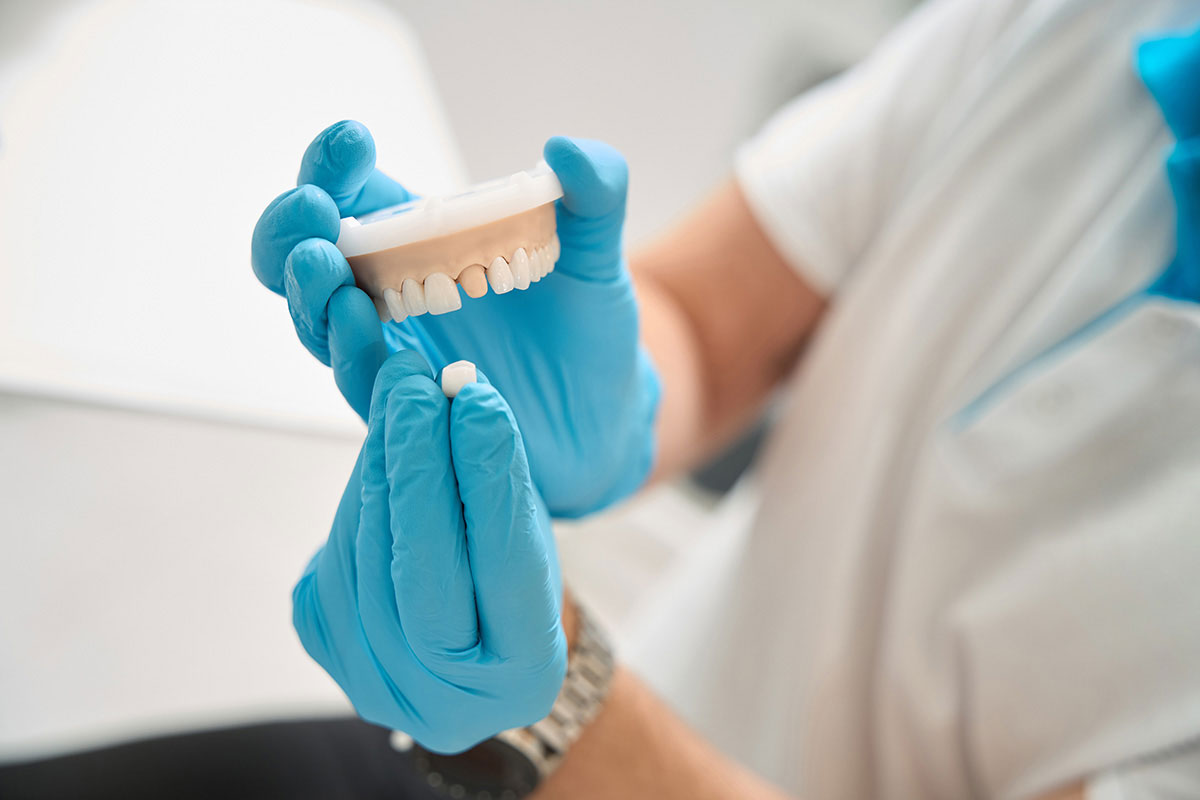
A veneer covers the front surface of a tooth and can be used to improve discoloration, shape, chips, or other cosmetic concerns.
The ADA describes veneers as custom-made coverings that can improve the appearance of stained, chipped, broken, crooked, or misshapen teeth.
Secure Dental provides cosmetic services that include veneers and professional tooth whitening.
A veneer may make sense when:
- The tooth is healthy
- Whitening is unlikely to produce the desired result
- The color difference is substantial
- There are additional cosmetic concerns involving shape or size
But I would not place a veneer simply to hide a tooth that has an untreated problem inside.
Health comes first.
When Would a Crown Be Better Than a Veneer?
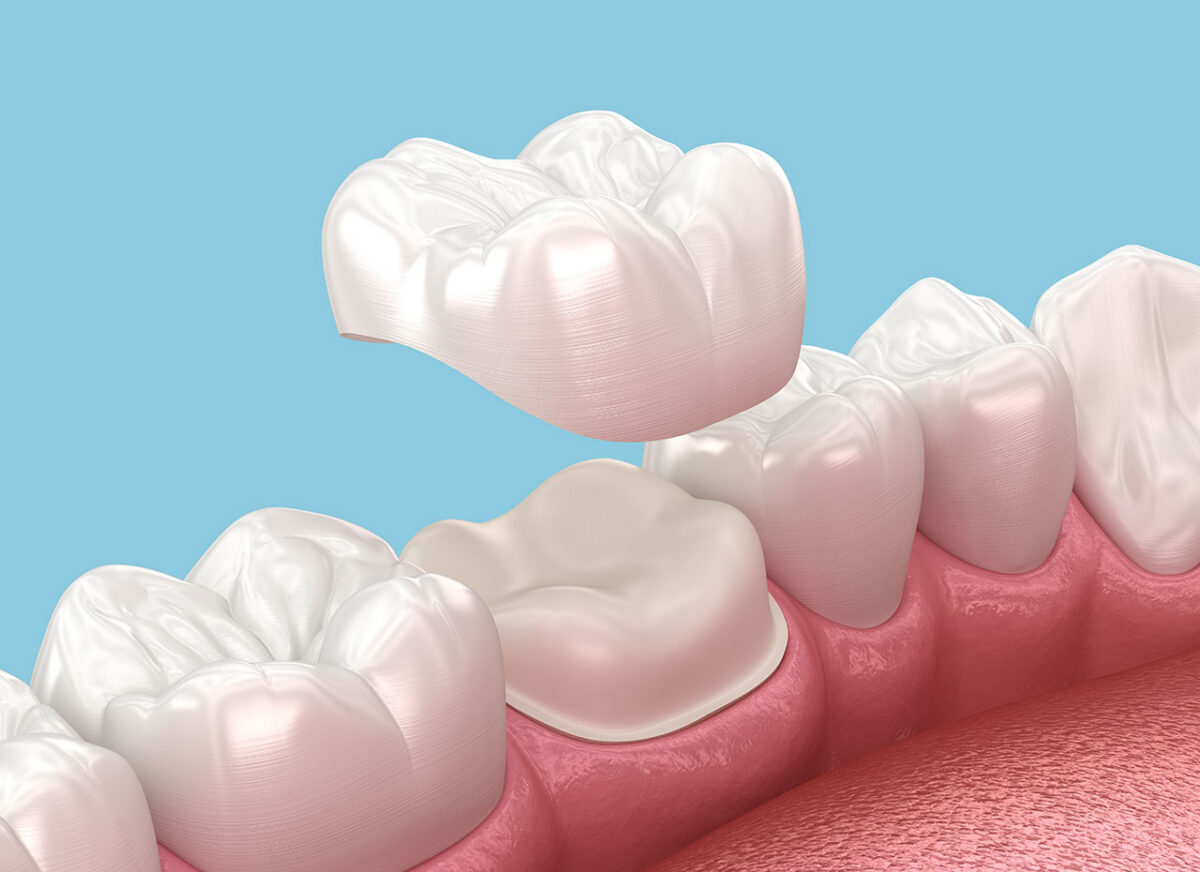
A crown covers much more of the tooth than a veneer.
I am more likely to consider a crown when the tooth is not only discolored but also structurally weakened.
Examples include a tooth with:
- A large filling
- Significant fracture
- Major enamel loss
- Extensive decay
- Previous root canal treatment and limited remaining structure
Secure Dental identifies crowns among its cosmetic and restorative options for damaged teeth.
Our Ask Secure Dental article “What’s the Difference Between a Crown and a Veneer?” explains why those restorations are not interchangeable.
Could I Need a Root Canal Even If My Tooth Is Painless?
Yes.
Root canal treatment is not prescribed simply because a tooth hurts.
It is recommended when the pulp has become irreversibly damaged or infected and the tooth can still be preserved.
Trauma is one possible cause.
The American Association of Endodontists explains that dental trauma can injure the pulp and that the long-term response depends on the nature of the injury. Follow-up may be needed because complications can develop after the original event.
If testing and imaging indicate that the pulp has died or infection has developed, root canal treatment may help preserve the natural tooth.
Secure Dental’s Foster Ave. office provides root canal therapy for infections and inflammation involving the inside of teeth.
And if the words “root canal” immediately make you nervous, our original Ask Secure Dental article “Do Root Canals Actually Hurt?” walks through modern treatment step by step.
What If My Tooth Turned Dark After Being Hit Recently?
Schedule an examination.
A recent injury can affect a tooth even when there is no visible crack.
The American Association of Endodontists notes that traumatic dental injuries require evaluation and, in some cases, continued follow-up because changes may develop after the initial injury.
Tell us:
- When the injury occurred
- Whether the tooth moved
- Whether it bled around the gum
- Whether there was swelling
- Whether it became sensitive
- When the color started changing
A tooth may need monitoring rather than immediate treatment.
The important part is establishing a baseline so future changes can be compared.
What If the Tooth Is Dark and I Also Have a Gum Bump?
That combination deserves prompt attention.
A gum bump near a discolored tooth can sometimes indicate drainage from an infection associated with the root.
Other warning signs include:
- Swelling
- Bad taste
- Drainage
- Fever
- Pain when biting
- Facial swelling
Our Ask Secure Dental guide “I Have a Pimple on My Gum. Is That a Dental Abscess?” explains why an infection can occasionally be present even when tooth pain is mild.
Contact the office rather than attempting to pop or drain the area yourself.
What Will Secure Dental Check?
At Secure Dental on Foster Ave., your evaluation may include:
- Comparing the tooth with neighboring teeth
- Asking about previous trauma
- Checking for decay
- Looking for cracks or fractures
- Testing sensitivity when appropriate
- Examining the gums
- Evaluating existing fillings or crowns
- Taking dental X-rays when indicated
- Assessing whether the pulp appears healthy
- Discussing cosmetic options only after health concerns are addressed
From there, the recommendation might be:
- Monitoring
- Professional cleaning
- Restorative treatment
- Root canal therapy
- Whitening
- Internal bleaching in an appropriate previously treated tooth
- Veneer treatment
- Crown treatment
There is no one procedure for every dark tooth.
Do Not Whiten the Symptom Before Diagnosing the Cause
If one tooth suddenly looks gray or much darker than the others, do not assume that stronger whitening gel is the solution.
Sometimes the issue is cosmetic.
Sometimes the color is giving us information about what happened inside the tooth.
The first step is finding out which situation applies to you.
Request an appointment with Dr. Eric Wing at Secure Dental on Foster Ave., located at 1828 W Foster Ave., Chicago, Illinois 60640.
Call (872) 888-9339 to request an appointment. Secure Dental currently identifies Dr. Eric Wing as the general dentist serving its Foster Avenue office.
Ask Your Own Question
Have a dental question you would like a Secure Dental doctor to answer?
About Dr. Eric Wing

Dr. Eric Wing is a general dentist at Secure Dental’s Foster Avenue location in Chicago.
Dr. Wing earned his bachelor’s degree in Kinesiology from the University of Illinois Chicago in 2019, followed by a master’s degree in Biotechnology from Rush University Medical Center in 2022. He earned his Doctor of Dental Medicine degree from Midwestern University in 2026.
Secure Dental describes Dr. Wing as passionate about helping patients improve both their oral health and confidence while building long-term relationships through personalized, compassionate care. Outside the office, he enjoys tennis and swimming.
Request an appointment with Dr. Eric Wing at Secure Dental on Foster Ave.